
Buying your first car can feel like walking into a maze blindfolded. It's easy to feel overwhelmed before you even step onto a lot. That's why we put together this first time car buyers guide, to walk you through the process step by step so you know what to expect and feel confident along the way. We've been helping drivers throughout Pierce County find the right vehicle since 1938, and we've seen firsthand what makes the process smooth for first-time buyers, and what tends to trip people up. This guide draws on that experience to give you practical, no-pressure advice for buying your first car. If you'd rather skip ahead, you can always contact our team with questions along the way. What Every First-Time Car Buyer Needs to Know Before you start browsing listings, get grounded in a few basics. Think about what you actually need from a vehicle: your commute, your budget, whether you need cargo space or just reliable transportation to get to work. Total cost of ownership matters just as much as the sticker price, since ongoing expenses add up over time. Emotions run high during car buying, especially the first time around. Staying level-headed and sticking to your research will serve you far better than falling for the first shiny model you see. Understanding your financing options and credit standing early on also puts you in a stronger position once you get to the negotiating table and start talking rates. Documents You'll Need Before Buying a Car Getting a car requires less paperwork than most people expect, but having everything ready ahead of time saves you a trip back home mid-purchase. Proof of Identity and Residency You'll need a valid, unexpired driver's license as your primary form of ID. Some dealers also ask for a second form, like a passport or Social Security card, so it doesn't hurt to bring one along. Proof of residency, such as a utility bill, lease, or mortgage agreement, confirms your current address for both financing and registration purposes. Proof of Income and Insurance Information Lenders want to see that you can reasonably afford the loan, so bring recent pay stubs, bank statements, or W-2s. If you're self-employed, plan on providing your last two years of tax returns along with 1099s. You'll also need your insurance information, including your policy number and insurer contact, since most lenders require proof of coverage, or a binder, before you can drive the vehicle off the lot. Have your Social Security number handy too. If you're trading in a vehicle, bring its title and current registration. Keep this checklist on hand: a valid driver's license plus a secondary ID if requested, proof of residency through a utility bill, lease, or mortgage statement, proof of income via pay stubs, bank statements, W-2s, or two years of tax returns if you're self-employed, your insurance policy number and insurer contact information, your Social Security number, and the title and registration if you're trading in a vehicle. Research to Complete Before You Shop Knowing what to look into before you walk into a dealership starts well before you ever step onto the lot. A little homework upfront saves you from surprises later. Setting a Realistic Budget A good guideline is to keep your car payment under about 10% of your take-home pay, and total transportation costs under 15 to 20%. AAA puts the annual cost of owning a new car at around $11,577 for a typical buyer with a five-year loan, a figure that covers registration, depreciation, interest, gas, insurance, maintenance, and fees. That number is a helpful reminder that the purchase price is only part of the equation. Loan terms matter too. Common options include 24, 36, 48, 60, 72, and 84 months, and while a longer term lowers your monthly payment, it raises the total interest you'll pay over the life of the loan. Comparing New, Used, and Certified Pre-Owned Options New vehicles come with the latest features, full factory warranties, and no wear history, which makes them appealing but usually pricier upfront. Used vehicles trade some of that reliability for a lower price, though used-loan interest rates tend to run a bit higher than new-loan rates. Certified pre-owned, or CPO, vehicles split the difference: they're late-model used vehicles that have been inspected and backed by a warranty, giving you extra peace of mind without the full price tag of new. If you're watching your budget closely, sedans and compact models tend to offer lower starting prices and lower ownership costs overall, which makes them a popular choice among first-time and budget-conscious buyers. You can browse our new inventory, explore our used inventory, or check out our certified pre-owned program to see what fits your needs and your wallet. Checking Your Credit Beforehand Your credit score plays a real role in what rate you're offered, though it's rarely a simple pass-fail situation. Lenders generally think in terms of tiers ranging from poor up through excellent, and where you fall affects your options. That said, there's no single required score for auto financing. A lower score won't necessarily block you from getting a loan, but it may mean a higher rate. Pulling your credit report ahead of time lets you spot and fix errors before they cost you money. Understanding Your Financing Options Figuring out how to finance a car for the first time is often the part that intimidates buyers the most, but breaking it into steps makes it manageable. Getting Pre-approved for a Loan Getting pre-approved before you shop is one of the simplest ways to walk into the buying process with confidence. Pre-approval shows you your likely rate and flags any issues on your credit report before you're standing in a dealership. It also clarifies your loan limit, which helps you set a realistic budget and strengthens your position when it's time to negotiate. If you're applying with multiple lenders to compare offers, try to do it within a two-week window; credit bureaus typically treat those inquiries as a single credit pull rather than several separate ones. Starting your finance application with us is a low-pressure way to see where you stand before you ever set foot on the lot. Bank, Credit Union, or Dealership Financing Don't assume one type of lender is automatically your best option. Credit unions are not-for-profit institutions and often offer lower rates than traditional banks. Banks and online lenders offer their own competitive terms and are worth comparing. Dealership financing, meanwhile, is convenient since it's handled on-site, and it sometimes comes bundled with manufacturer promotions, though it can occasionally carry higher rates or add-ons if you're not paying close attention. Comparing all three before committing gives you the clearest picture of what you're actually getting. Rates and terms vary based on your creditworthiness and the lender, so it's worth checking more than one source. What to Expect at the Dealership Once your paperwork and financing are lined up, the car buying process at the dealership itself should feel far less intimidating. Taking a Test Drive Bring your valid driver's license, your smartphone with a charging cord to test connectivity features, and a notepad for jotting down impressions. Start with a walk-around: check the tire tread and any rash, look for paint chips, and make sure no warning lights are on before you start the engine. Once you're moving, test the radio and climate controls, windows, and locks. Drive on both city streets and the highway to get a full sense of how the vehicle handles at different speeds. Test the A/C and heat while driving, check your mirrors and backup camera, and pay attention to any parking sensors. Don't rush this step; plan to spend at least 30 minutes behind the wheel before making any decisions. Negotiating Price with Confidence Confidence in negotiation comes largely from preparation. Since you're already pre-approved, you know your budget and your likely rate, which puts you in a stronger position from the start. Focus your negotiation on the total out-the-door price rather than the monthly payment; a low monthly number can hide a longer loan term or a higher overall cost. If you have a trade-in, keep that conversation separate from the price negotiation on the new vehicle so the numbers stay clear. Negotiate one item at a time rather than juggling several variables at once, and remember that you're always free to walk away if the numbers don't work for you. When you reach the finance office, know that add-ons like extended warranties, paint and fabric protection, gap coverage, and key replacement plans are optional. You can decline any of them without affecting your loan approval. Reviewing the Contract Before You Sign Read the contract line by line before you sign anything. Confirm that the price and interest rate match what you agreed to earlier in the process. Watch closely for unnecessary add-ons or fees that may have been slipped in. If anything on the page doesn't make sense, ask questions until it does. Never sign a document you don't fully understand, no matter how far along the process feels. Common Mistakes First-Time Buyers Should Avoid A few recurring mistakes tend to cost first-time buyers the most, in dollars and in headaches. Skipping research tops the list. Taking time to check VIN-based history reports and manufacturer reliability data before you commit can save you from a costly surprise down the road. Letting emotion drive the decision causes just as much trouble, especially when a particular color or feature catches your eye before you've confirmed the vehicle fits your budget. Stretching a loan term to shrink the monthly payment might feel like relief in the moment, but it usually means paying significantly more in total interest over time. Not shopping around for financing or for the vehicle itself often leaves money on the table that a little extra comparison shopping would have caught. Fixating on the monthly payment instead of the total ownership cost is closely related, since a lower payment doesn't always mean a better deal once you factor in interest, fees, and loan length. And skipping the test drive, even for a vehicle that looks perfect on paper, means missing a chance to catch handling issues or comfort problems before they become your problem. A Quick Note for Washington Buyers Buying a car in Washington comes with a few state-specific steps worth knowing upfront. Sales tax applies to your purchase price and varies depending on your location within the state. Once you've bought the vehicle, you'll need to complete the title transfer process to establish legal ownership, and you'll register the vehicle through the Washington DOL (Department of Licensing). These steps apply whether you're buying in Tacoma, Olympia, or Lakewood, and our team can walk you through the paperwork so nothing gets missed. Visit Titus-Will Ford for Your First Car Purchase Buying your first car doesn't have to feel like a gamble. Show up with your documents ready, a realistic budget in mind, and a pre-approval already in your pocket, and you're in control of the process rather than reacting to it. Why Buyers Choose Titus-Will Ford As one of Washington's largest-volume Ford dealers, we've spent decades helping drivers throughout Tacoma, Olympia, and Lakewood find vehicles that fit their lives and their budgets, whether that's a new Ford truck, SUV, or EV, or something from our selection of used and certified pre-owned options. Ready When You Are Our team is here to answer questions, not push you toward a decision you're not ready for. When you're ready to take the next step, get in touch with Titus-Will Ford or start your finance application online. We're glad to help make your first car-buying experience a confident one.
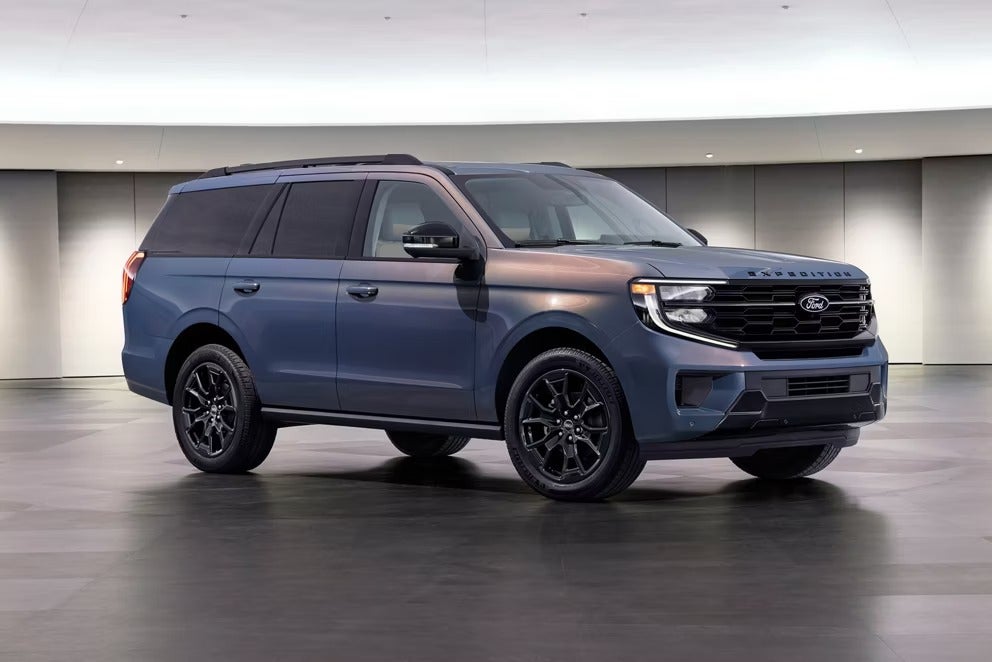
2027 Ford Expedition Vs 2026 Chevrolet Tahoe
Full-size SUV shoppers in Tacoma, Olympia, and Lakewood have two heavyweight contenders to consider this year: the 2027 Ford Expedition and the 2026 Chevrolet Tahoe. Both vehicles offer family-friendly room, towing muscle, and enough tech to keep everyone entertained on the drive to the mountains or the coast. Line up the specs side by side, though, and one of these SUVs pulls ahead in nearly every category that matters to Puget Sound drivers. 2027 Ford Expedition Vs 2026 Chevrolet Tahoe: Why the Expedition Wins The Expedition has more torque, more screen, and more usable cargo space, especially in MAX trim, and buyers don't have to climb the trim ladder to get most of it. Ford builds the 24-inch Panoramic Display, a 360-degree camera, and Co-Pilot360 Assist 2.0 into the base Active trim, and BlueCruise hands-free driving can be added there, while Chevrolet's Super Cruise starts a rung above the base Tahoe LS. Towing a boat on the Sound, hauling gear up to Mount Rainier, shuttling a full roster of kids around Lakewood: whatever the job, the Expedition's mix of capability and standard equipment makes it the more sensible buy. Performance and Capability Compared Compare the Ford Expedition vs Chevy Tahoe on paper, and Ford's turbocharged approach to power shows right away. The standard twin-turbo V6 out-torques both Tahoe V8s, and the High-Output version tops every engine Chevrolet offers on horsepower and torque alike, an advantage that carries directly into towing numbers. The Expedition also pairs with a 10-speed automatic transmission across every configuration, giving drivers a consistent, well-matched powertrain no matter which trim they choose. Engine Power and Towing Advantage The 2027 Expedition's standard engine is a twin-turbo 3.5L EcoBoost V6 rated at 400 hp and 480 lb-ft of torque (manufacturer-reported). Buyers who want more can step up to the available High-Output version, which pushes output to 440 hp and 510 lb-ft. Both come backed by the 10-speed automatic. The 2026 Tahoe's base 5.3L V8 produces 355 hp and 383 lb-ft, with an optional 6.2L V8 stepping up to 420 hp and 460 lb-ft. Chevrolet also offers a 3.0L turbo-diesel I6 rated at 305 hp and 495 lb-ft for buyers prioritizing low-end torque. Towing is where the Expedition really separates itself. Configured with the Heavy-Duty Trailer Tow Package, the Expedition 4x4 can tow up to 9,600 lbs, while 4x2 models handle up to 6,000 lbs. The Expedition MAX 4x4 tows up to 9,000 lbs, and MAX 4x2 reaches 6,300 lbs. All figures are manufacturer-reported. The Tahoe tops out at 8,400 lbs, so the Expedition wins here by 1,200 lbs, which matters if you're pulling a travel trailer, ski boat, or landscaping trailer around Puget Sound. Fuel economy favors the Expedition against the Tahoe's V8s, with 4x4 models rated at 15/22/18 mpg city/highway/combined and 4x2 Active models at 16/24/19 mpg, versus 15/20/17 for a rear-drive 5.3L Tahoe (EPA estimates). Chevrolet's optional Duramax diesel is the efficiency leader here at 21/28/24. Off-road-minded buyers can step into the Expedition Tremor, a 4x4-only trim that adds 33-inch all-terrain tires, a 3.73 electronic-locking differential, Raptor-inspired skid plates, and a Rock Crawl mode. Chevrolet's closest counterpart is the Tahoe Z71, which brings an aluminum skid plate, all-terrain tires, and a two-speed transfer case, with an electronic limited-slip differential offered in its Off-Road Package. Technology and Driver-Assist Features Ford loads the Expedition with a 24-inch Panoramic Display paired with a 13.2-inch center touchscreen, part of the Ford Digital Experience suite. What matters more day to day is what comes standard. Even the base Active trim includes Ford Co-Pilot360 Assist 2.0, Adaptive Cruise Control with Stop & Go, Pre-Collision Assist with AEB, Lane-Keeping System, a 360-Degree Camera, and BLIS with Trailer Tow Coverage. BlueCruise, Ford's hands-free highway driving system, is also available, a genuine benefit for commuters making the I-5 run between Tacoma and Olympia. Safety extends through the cabin, too, with dual-stage front, side, and Safety Canopy curtain airbags covering all three rows. Wireless Apple CarPlay and Android Auto come standard, along with USB-C ports at every row, and buyers who want premium sound can opt for the 22-speaker B&O Unleashed Sound System, standard on the King Ranch trim. The Tahoe holds its own with a 17.7-inch touchscreen, an 11-inch driver display, Google built-in, and wireless Apple CarPlay/Android Auto, and the LS comes standard with Adaptive Cruise Control and HD Surround Vision. Chevrolet's Super Cruise hands-free system is a genuine highlight, but it's listed on the LT, RST, Premier, and High Country trims, not the base LS. Ford, by contrast, offers BlueCruise on the Expedition Active, so hands-free highway driving is on the table from the first rung of the ladder rather than the second. Passenger Space and Cargo Capacity Bigger depends on where you're measuring. In pure cargo volume behind the third row, the Tahoe edges ahead at 25.5 cu ft versus the standard Expedition's 22.9 cu ft. Bring the MAX version into the picture, though, and the story flips: the Expedition MAX offers 37.4 cu ft behind the third row, 84.5 cu ft behind the second row, and 123.1 cu ft maximum cargo capacity, beating the Tahoe's 72.5 cu ft and 122.7 cu ft in those same measurements. For families packing plywood for a home project or a kayak for a Puget Sound paddle, that MAX configuration matters. Passenger space tells a similar story. The Expedition seats up to 8 (7 in King Ranch trim), with 41.8 inches of first-row headroom and 43.9 inches of legroom. Its third row measures 36.5 inches of legroom against the Tahoe's 34.9, and sliding the second row forward stretches that to 43.5 inches when you need it, though the Tahoe holds a slight edge in third-row headroom and a little more room up front. The optional 40/20/40 PowerFold third-row seat with powered recline adds real convenience for large families relying on that back row regularly. The Tahoe counters with 43.3 inches of front headroom and 44.5 inches of front legroom, plus 38.9 inches of second-row headroom and 42 inches of legroom. Its third row measures 38.2 inches of headroom and 34.9 inches of legroom, less generous than the Expedition's when it comes to stretching out. Trim Levels and Value for Your Money Ford offers the Expedition in four trims: Active, Platinum, Tremor, and King Ranch. Active, Platinum, and King Ranch each come in standard or MAX length, while the Tremor is standard length and 4x4 only, making seven total configurations. The Active trim alone comes with 18-inch dark alloy wheels, all-terrain tires, wireless Apple CarPlay/Android Auto, the 24-inch Panoramic Display, Ford Co-Pilot360 Assist 2.0, and seating for 8. The 2027 model year also introduces a 30th Anniversary Appearance Package, available exclusively on the Platinum trim, for buyers wanting something distinctive. Chevrolet's Tahoe spans six trims: LS, LT, RST, Z71, Premier, and High Country, with captain's chairs available on LT, RST, and Z71 and standard on Premier and High Country. When it comes to Tahoe vs Expedition price, we won't quote exact MSRP here since trims, equipment, and pricing are subject to change and should always be confirmed directly with Titus-Will Ford. What's clear from the specs alone is that both base trims cover the safety essentials, and the Expedition Active adds the 24-inch Panoramic Display and the option of BlueCruise hands-free driving, which no Tahoe LS can be ordered with at any price. The Verdict: Why the Expedition Is the Smarter Choice Look at the Ford Expedition vs Chevrolet Tahoe specs side by side, and the Expedition comes out ahead where it counts most for Tacoma-area drivers: 4x4 towing capacity, display technology, third-row legroom, and MAX cargo volume. The Tahoe still has a lot going for it, backed by two V8s, an available diesel, and a solid reputation of its own. But the Expedition's twin-turbo V6 lineup, standard driver-assist suite, and flexible MAX configuration give families, adventurers, and local businesses around Tacoma real capability without needing to climb the trim ladder to get it. Reliability is always a fair question when comparing full-size SUVs, and we'd encourage shoppers weighing Expedition vs Tahoe reliability to talk with our service team about maintenance history and long-term ownership experience with Ford's EcoBoost lineup. Numbers on a spec sheet only tell part of the story. Schedule Your Ford Expedition Test Drive at Titus-Will Ford Experience the Expedition Firsthand Reading through Ford Expedition vs Chevrolet Tahoe reviews and spec sheets only gets you so far. The real test is behind the wheel. At Titus-Will Ford, we can put you in a 2027 Expedition so you can feel the EcoBoost power, try the BlueCruise hands-free system on the highway, and check out how the third row and MAX cargo area work for your family or your business. Since we're a Ford dealership, we're only able to offer test drives on the Expedition, not the Tahoe, but we're confident it will speak for itself. Visit Us in Tacoma Stop by our dealership at 3606 South Sprague, Tacoma, WA 98409, call us at 253-356-8021, or contact Titus-Will Ford to schedule your visit. We're open Monday through Friday from 9 AM to 8 PM, Saturday from 9 AM to 7 PM, and Sunday from 10 AM to 6 PM. Our team is ready to help you find the Expedition configuration that fits your life around Tacoma, Olympia, and Lakewood.