

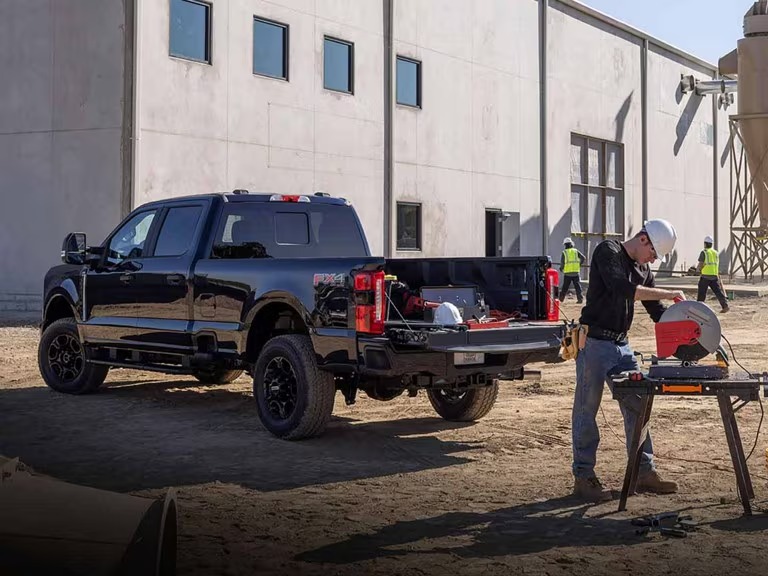
If you’re shopping for trucks in Tacoma, Washington, you’ll eventually find yourself looking at the Ford F-150 and Chevrolet Colorado. So how exactly do they compare? The main difference is the F-150 competes in the full-size truck segment, while the Chevrolet Colorado sits in the midsize arena. As a result, the F-150 offers more power, towing capacity, payload, and cab/bed configurations, making it an ideal work partner or family hauler.
On the other hand, the Colorado’s smaller footprint makes it more maneuverable and generally more fuel efficient than larger trucks. Colorado drivers can still enjoy the 4×4 capability and truck bed versatility without the price tag of a full-size pickup. We invite you to read on as we learn more about what makes these trucks so attractive.
Performance, Engines, and Driving Dynamics
Truck performance starts under the hood. The F-150 has six engine options depending on your choice of trim.
2.7-Liter EcoBoost V-6 Engine
The base engine in the XL, STX, and XLT models is Ford’s 2.7-liter EcoBoost V-6, which uses twin intercooled turbochargers and port-fuel and direct-injection (PFDI) technologies. This powertrain produces 325 horsepower and 400 lb-ft of torque.
5.0-Liter V-8 Engine
Ford’s 5.0-liter V-8 engine paired with a ten-speed automatic transmission comes standard in the Lariat and Tremor trims. This powertrain makes 400 horsepower and 410 lb-ft of torque.
3.5-Liter EcoBoost V-6 Engine
A 3.5-liter EcoBoost V-6 engine powers the King Ranch and Platinum models. Using Ford’s PFDI system with two injectors per cylinder to boost performance, this twin intercooled engine kicks in with virtually no lag, recording 400 horsepower and 500 lb-ft of torque.
3.5-Liter PowerBoost Full-Hybrid V-6 Engine
Ford offers its 3.5-liter PowerBoost Full-Hybrid V-6 engine as an option for the XLT, Lariat, King Ranch, and Platinum trims. This gas-powered engine uses a separate electric motor and battery to boost power output, resulting in 430 horsepower and 570 lb-ft of torque.
Raptor-Exclusive Engines
The last two engines are only available on the F-150 Raptor models. The base Raptor engine is a 3.5-liter Twin-Turbo High-Output EcoBoost V-6 engine with PDFI technologies. This Baja-bred powertrain produces 450 horsepower and 510 lb-ft of torque. The Raptor R trim has the most powerful high-performance engine ever installed in an F-150. Ford’s Supercharged V-8 engine will pin you to your seat with its impressive 720 horsepower and 640 lb-ft of torque.
Terrain Management System
Ford offers seven selectable drive modes depending on your powertrain. An ECO mode optimizes fuel efficiency for your Tacoma commute, while the Normal mode provides a more balanced output of power and economy. Sport mode dials in your throttle, steering, and suspension for crisp on-road driving dynamics. The Slippery mode distributes power more efficiently when the surfaces get slick. Deep Snow/Sand and Mud/Rut modes enhance your traction and stability control systems to power through the harsher conditions.
2.7-Liter TurboMax Engine
Chevrolet makes the Colorado available in five trims to suit various driving needs. A 2.7-liter TurboMax inline four-cylinder engine bolted to an eight-speed automatic transmission powers all five models. This powertrain produces 310 horsepower and 430 lb-ft of torque.
Terrain Management System
This engine also has up to five selectable drive modes depending on your trim. Normal mode is your default for your everyday Tacoma commute. An Off-Road mode delivers better traction on loose, slippery surfaces, such as grass, mud, gravel, or deep snow.
A Terrain mode provides low-end torque for climbing steep hills or crawling over obstacles. The ZR2-exclusive Baja mode delivers exceptional traction and stability in sandy conditions. The available Tow/Haul mode optimizes performance for towing and hauling heavy loads.
Towing, Payload, and Utility Capabilities
The F-150 has impressive towing and hauling capabilities throughout its lineup. Trucks with the base 2.7-liter EcoBoost engine can tow up to 8,400 pounds and haul another 1,775 pounds in their beds. Ford’s 5.0-liter powertrain enables a maximum towing capacity of 12,900 pounds and a payload rating up to 2,225 pounds.
F-150 models with the 3.5-liter EcoBoost engine get the highest tow rating of 13,500 pounds and a 2,440-pound payload rating. The 3.5-liter PowerBoost Full-Hybrid variant produces a slightly lower tow rating of 11,200 pounds and a payload capacity of 1,750 pounds. The full-hybrid engine features Ford’s Pro Power Onboard system that delivers 2.4 kW of power to plug in power tools for work around Tacoma or a television for your weekend tailgating parties at Lumen Field.
Every Chevrolet Colorado trim can tow up to 7,700 pounds and haul up to 1,684 pounds, except the ZR2. The heavy-duty off-road equipment installed on the ZR2 reduces its towing capacity to 6,000 pounds and its payload capacity to 1,280 pounds.
Fuel Economy and Cost of Ownership
The EPA estimates Ford F-150 trucks with the 2.7-liter engine get 19 mpg city and 25 mpg highway ratings. The 3.5-liter V-6 earns ratings of 17 mpg city and 25 mpg highway. The full-hybrid powertrain gets the best fuel economy with its 22/24 city/highway mpg, making it the ideal vehicle for your Tacoma-area commute.
The rear-wheel-drive Colorado models get up to 20 mpg city and 24 mpg highway ratings, while the AWD trims get 18/22 city/highway estimates. The off-road ZR2 earns the lowest ratings of 17 mpg in the city and on the highway.
Interior Comfort, Tech, and Infotainment
Both trucks offer comfortable cabins with cloth upholstery in the lower trims and premium leather appointments in the higher models. However, the King Ranch and Platinum models take comfort to the next level with heated and ventilated seats to warm you against Washington winter chills and cool you in the summer sun. Trim-exclusive authentic wood and metal trim add a sophisticated flourish that the Colorado doesn’t offer.
Ford’s infotainment tech runs on a 12.0-inch display, and Chevrolet uses a slightly smaller 11.3-inch screen. Both systems have Apple CarPlay and Android Auto capability. Both vehicles offer trailering apps for confident I-5 towing.
Schedule Your Ford F-150 Test Drive Today
After our comparison, we aren’t surprised that the F-150 outperforms the Colorado in every meaningful way. If you need the full-size power and performance of a truck ready to handle the Tacoma workweek or your off-road adventures on the weekends, the F-150 has the size and capability to tackle the toughest jobs and terrain. Drivers more interested in light towing and hauling with moderate off-road capability will gravitate to the Colorado pickup. We invite you to schedule a test drive today to see how much more truck you get with the Ford F-150.
Connect with us


